
Wedding Mix: The Complete Guide to Building a Perfect Reception Soundtrack (2026)
A step-by-step method to build a coherent wedding mix — cocktail, dinner, first dance, dance floor — without a pro DJ or complicated software.
Eine durchschnittliche Hochzeit versammelt rund 100 Gäste für etwa acht Stunden Feier. In all dieser Zeit ist es die Musik – nicht das Menü, nicht die Deko – die entscheidet, ob Ihre Gäste bis 2 Uhr morgens bleiben oder um 23 Uhr leise verschwinden. Die gute Nachricht: einen eigenen Hochzeitsmix zu bauen war noch nie so einfach wie 2026. Dieser Leitfaden bündelt die komplette Methode, die wir anwenden: Genre-Verhältnisse, Minute-für-Minute-Aufteilung, BPM-Kurve, Übergänge, Dateiformate, Vorab-Checkliste und klassische Fallstricke.
Warum Sie Ihren Hochzeitsmix selbst bauen sollten
Ein Hochzeits-DJ verlangt im Schnitt zwischen 800 € und 1600 € für einen Einsatz von 6 bis 8 Stunden, und über 2000 € in Großstädten oder mit Sound- und Lichtpaketen. Bei einem durchschnittlichen Hochzeitsbudget von rund 15 000 € ist Musik regelmäßig der viertgrößte Posten nach Location, Catering und Garderobe.
Den Mix selbst zu bauen ist nicht nur eine Ersparnis: Es ist auch die Garantie, Ihre Songs zu hören, in Ihrer Reihenfolge, mit Übergängen, die auf die Momente abgestimmt sind, die zählen (Saaleinzug, Eröffnungstanz, Anschnitt der Torte). Sie behalten die Kontrolle und können die Wiedergabe trotzdem einem Angehörigen, einem Zeremonienmeister oder sogar einem DJ überlassen, der sich über eine strukturierte Basis statt einer übergangslosen Spotify-Playlist freuen wird.
- Realistische Ersparnis: 600 bis 1200 €, wenn Sie einen Moderator oder einen Soundverleih behalten, bis zu 1600 €, wenn Sie die Technik mit der Location teilen.
- Emotionale Stimmigkeit: Kein DJ kennt die Geschichte Ihres Paares so gut wie Sie selbst.
- Kontrolle über die Übergänge: Das unterscheidet eine „Playlist“ von einem „Mix“. 80 % des Tanzflächengefühls hängen von den 5 bis 10 Sekunden zwischen zwei Titeln ab.
Die Anatomie eines Abends: die 7 Schlüsselmomente
Eine moderne westliche Hochzeit folgt fast immer derselben Architektur. Sie zu kennen erlaubt es, den Mix in stimmige Blöcke zu unterteilen, jeder mit seiner eigenen Tempo- und Genrelogik.
| Uhrzeit | Moment | BPM | Dauer | Stimmung |
|---|---|---|---|---|
| 15:30 | Trauung | 60–90 | 20–40 Min. | Akustisch, instrumental, emotional |
| 16:30 | Sektempfang | 70–100 | 2 Std. | Jazz, Bossa, Lounge, Akustik-Coverversionen |
| 19:00 | Saaleinzug | 100–125 | 60–90 Sek. | Signatur-Drop, kurzer Build-up |
| 19:15 | Abendessen | 80–110 | 2 Std. 30 | Sanfter Pop, Soul, Gesprächslautstärke |
| 22:00 | Eröffnungstanz | 60–120 | 3 Min. | Langsam → schwungvoller Mash-up |
| 22:10 | Tanzfläche | 100–130 | 3–4 Std. | 3 Stufen: Eröffnung, Höhepunkt, Ausklang |
| 02:00 | Letzter Tanz | 60–110 | 3–4 Min. | Kollektive Hymne oder herzzerreißende Ballade |
Wie viele Songs pro Moment?
Ein klassischer Fehler besteht darin, in „200-Song-Playlist“ zu denken, ohne die zeitliche Aufteilung zu berücksichtigen. Hier eine bewährte Matrix für eine Hochzeit mit 80 bis 120 Gästen, 7-stündiger Abend ab dem Empfang:
- Empfang (2 Std.): 30 bis 35 Titel, Durchschnittslänge 3:30, überwiegend instrumental.
- Saaleinzug: 1 kurzer Mix von 60 bis 90 Sekunden, perfekt getimt.
- Abendessen (2 Std. 30): 35 bis 40 Titel, zwei bewusste Energieabsenkungen (Gangwechsel, Reden).
- Eröffnungstanz: 1 Mash-up aus 2 bis 3 Songs, maximal 3 Minuten.
- Tanzfläche (3 bis 4 Std.): 55 bis 75 Titel, davon 4 bis 6 langsame in zwei Mini-Sets verteilt.
- Letzter Tanz: 1 Signaturtitel, manchmal mit einem kurzen gesprochenen Intro.
Für eine schnelle Referenz zur Dimensionierung siehe unseren Artikel Wie viele Songs braucht der Mix einer Hochzeit?
Genres, Jahrzehnte, Sprache: die Verhältnisse, die funktionieren
Auf einer generationsübergreifenden Tanzfläche (20 bis 75 Jahre) ist das einzige zuverlässig funktionierende Gleichgewicht die sogenannte Viertelregel: ¼ 80er, ¼ 90er/2000er, ¼ 2010er, ¼ aktuelle Hits und Signatursongs des Paares. Mehr als die Hälfte eines einzigen Jahrzehnts, und Sie verlieren systematisch zwei Generationen.
Was die Sprache betrifft, verbindet ein Hochzeitsmix, der „funktioniert“, internationale Hits mit lokalen Titeln, die alle mitsingen können. Für die Detailverhältnisse siehe unsere Analyse der Sprachaufteilung 2026.
BPM und Energie: die Kurve des Abends
BPM (Schläge pro Minute) sind mehr als ein technischer Wert: Sie sind die emotionale Temperatur Ihres Abends. Die BPM-Kurve über den gesamten Mix zu zeichnen bedeutet, die Höhen und Tiefen der Feier im Voraus zu skizzieren.
Der ideale Spannungsbogen für die Tanzfläche folgt dieser Form: Start bei 100–110 BPM (erste 30 Min.), progressiver Anstieg auf 120–125 BPM, Höhepunkt bei 125–130 BPM gegen Mitternacht, dann Plateau, dann Abstieg auf 100 BPM zum Ende des Abends. Die goldene Regel: niemals mehr als 10 BPM absenken zwischen zwei aufeinanderfolgenden Titeln ohne langen Übergang.
Übergänge: die 5 goldenen Regeln
- Standard-Crossfade von 6 bis 8 Sekunden auf der Tanzfläche, 10 bis 15 Sekunden während Abendessen und Empfang.
- Auf einen Downbeat ausrichten: Der Übergang muss auf den ersten Schlag eines Takts fallen, sonst wirkt er „schief“, selbst wenn alles andere stimmt.
- BPM-Abstand ≤ 8 % ohne Tempokorrektur. Darüber hinaus einen Pivot-Titel oder eine längere Blende verwenden.
- Tonartkompatibilität (Quintenzirkel / Camelot-Notation) für stark exponierte Übergänge wie den Eröffnungstanz.
- Immer ein bewusstes „Cue-out“ bei Klassikern, die jeder kennt: eine Hymne vor dem zweiten Refrain abzuschneiden ist ein Fehler, sie bis zur Ausblendung laufen zu lassen ebenso.
Dateien und Technik vorbereiten
Drei nicht verhandelbare Regeln: lokale Dateien (am Tag selbst niemals Streaming), Loudness-Normalisierung auf etwa −14 LUFS, damit ein aktueller Titel nicht übersteuert, während ein Klassiker flüstert, und Export als MP3 320 kbps oder WAV.
- Audioquelle: Kaufen Sie Ihre Dateien (Bandcamp, iTunes) oder exportieren Sie aus einem Hi-Fi-Dienst mit persönlicher Lizenz. Niemals von YouTube extrahieren.
- Ausgabeformat: eine einzige WAV-Datei pro Block (vorgebackene Übergänge) oder ein nummerierter Ordner für die einzelnen Momente.
- Player: ein Computer im Flugmodus + ein USB-Stick als Reserve. Niemals ein Handy (Benachrichtigungen, Anrufe, Bluetooth-Umschaltung).
- Beschallung: 5 bis 7 Watt RMS pro Gast für eine anständige Tanzfläche, also etwa 800 W RMS für 120 Personen. Ein Wohnzimmer-Bluetooth-Lautsprecher reicht nicht.
Ihren Mix Schritt für Schritt bauen
Hier die komplette Methode, illustriert mit MixClap. Das Prinzip ist mit jedem Mixing-Tool identisch, aber MixClap automatisiert die mühsamsten Schritte (BPM-Erkennung, Downbeat-Ausrichtung, Normalisierung).
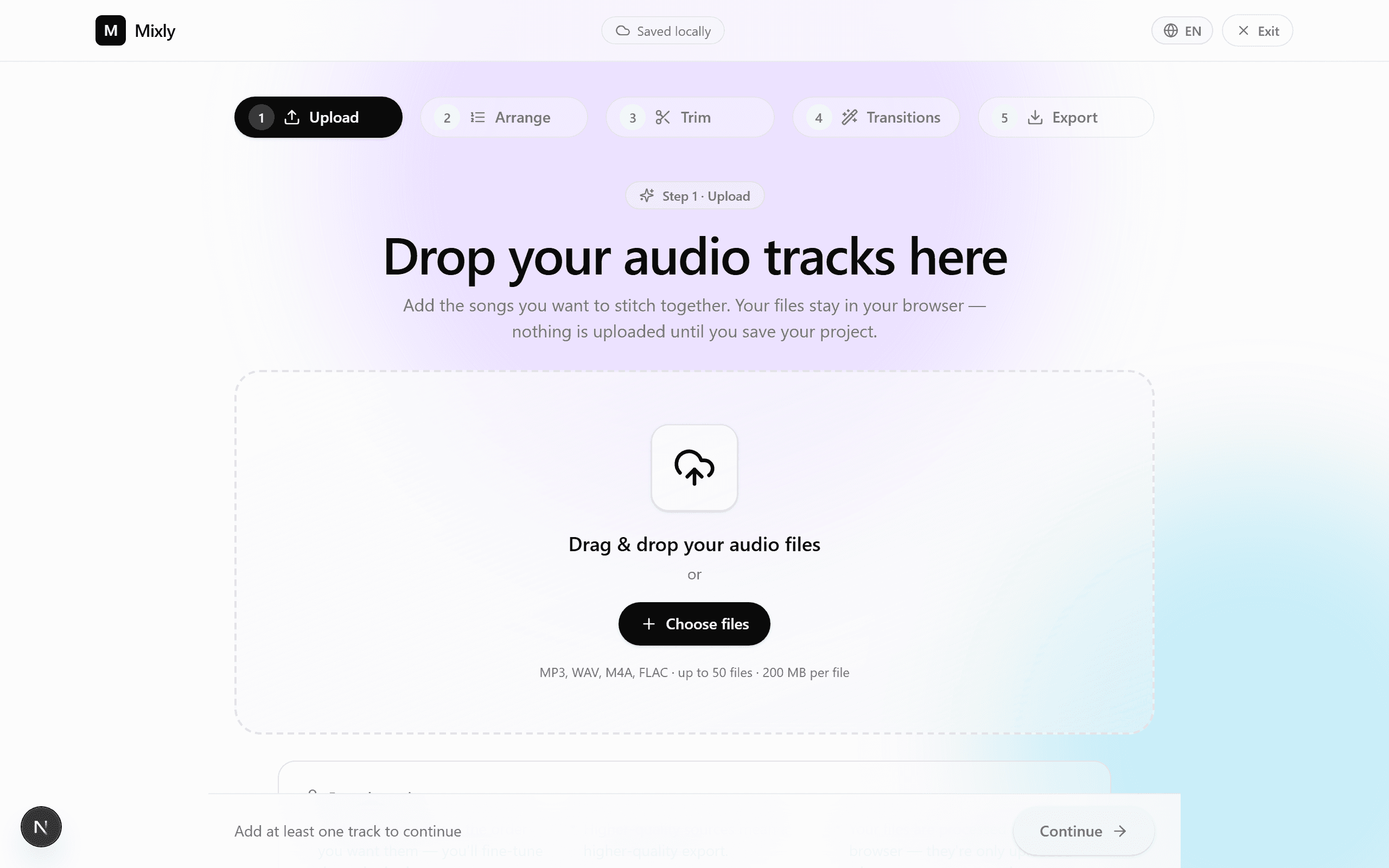
1. Ihre Tracks importieren und sortieren
Ziehen Sie alle Dateien des Blocks, den Sie vorbereiten (z. B. Tanzfläche), in das Tool. Jeder Track wird automatisch analysiert (BPM, Dauer, Energie).
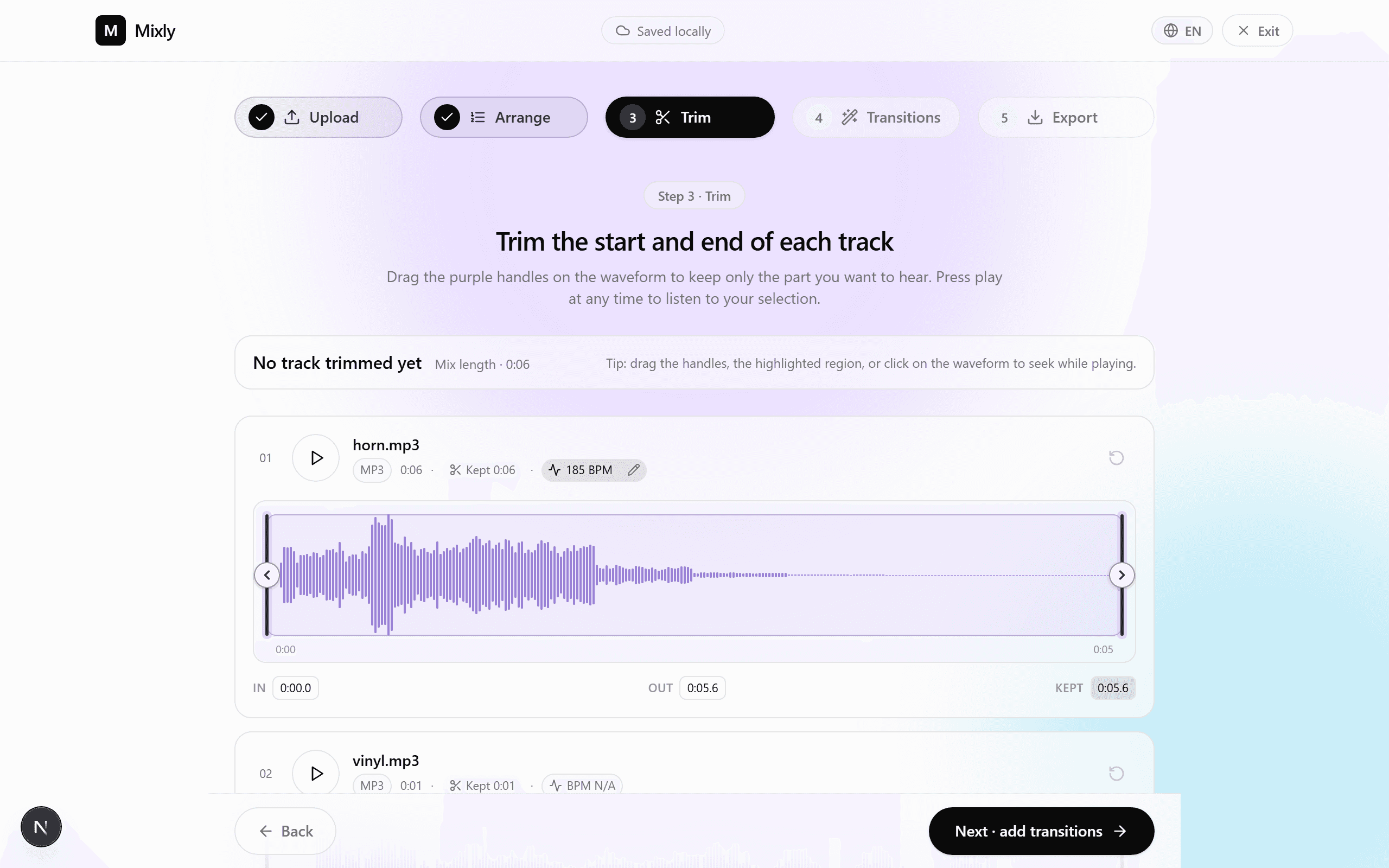
2. Trimmen und Ein-/Ausstiegspunkte
Schneiden Sie lange Intros und ausgeblendete Outros weg – sie sind die Hauptursache für „Löcher“ auf der Tanzfläche. Zielen Sie darauf, bei Hits, die jeder sofort erkennt, im ersten Refrain zu starten.
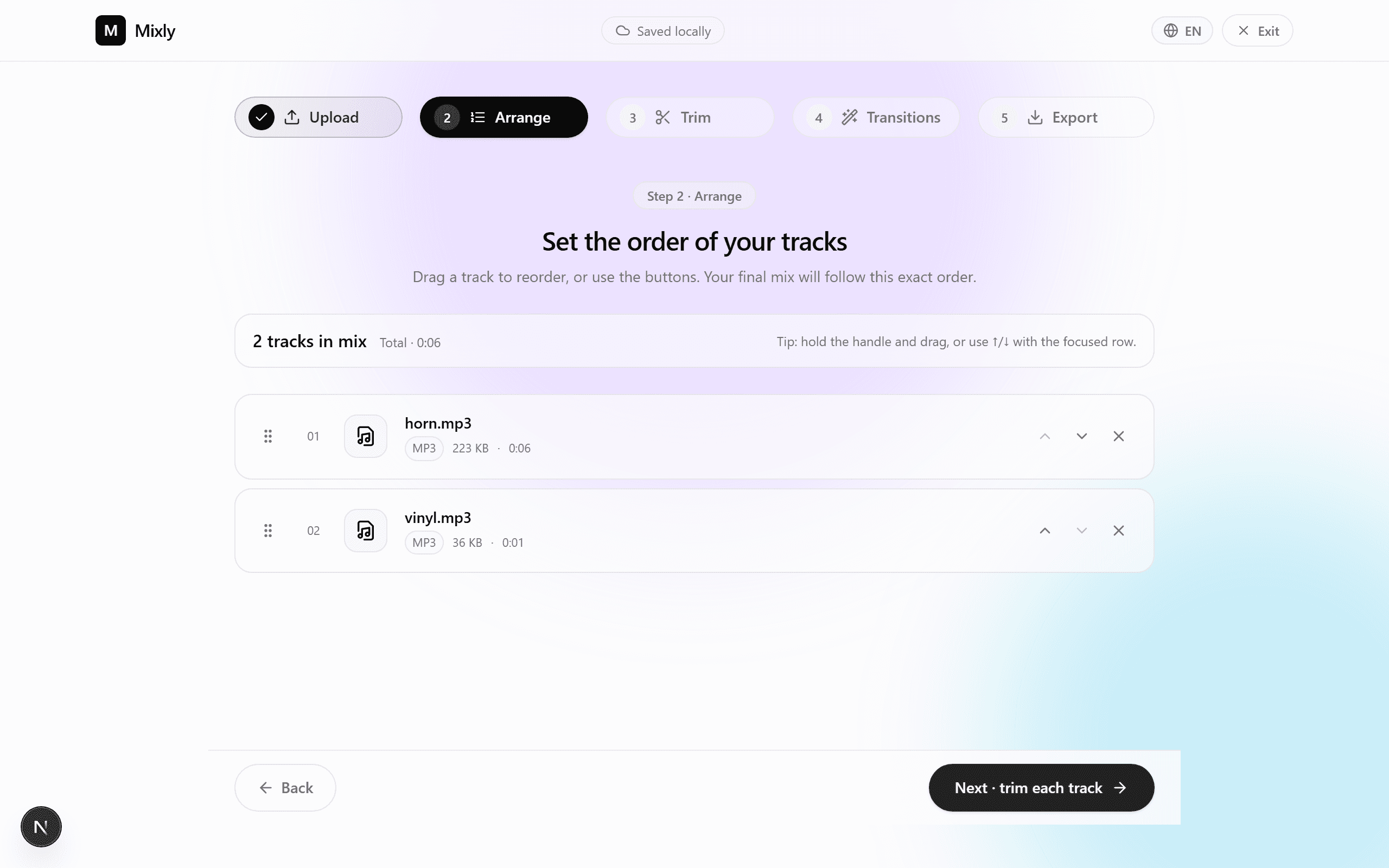
3. Anordnen und die Energiekurve glätten
Ziehen Sie die Tracks, um den Spannungsbogen des Blocks zu zeichnen. Für die Tanzfläche: Eröffnung bei 110 BPM, stetiger Anstieg, Höhepunkt um 23:45, Plateau, Abstieg. Prüfen Sie, dass kein BPM-Sprung 10 Punkte überschreitet.
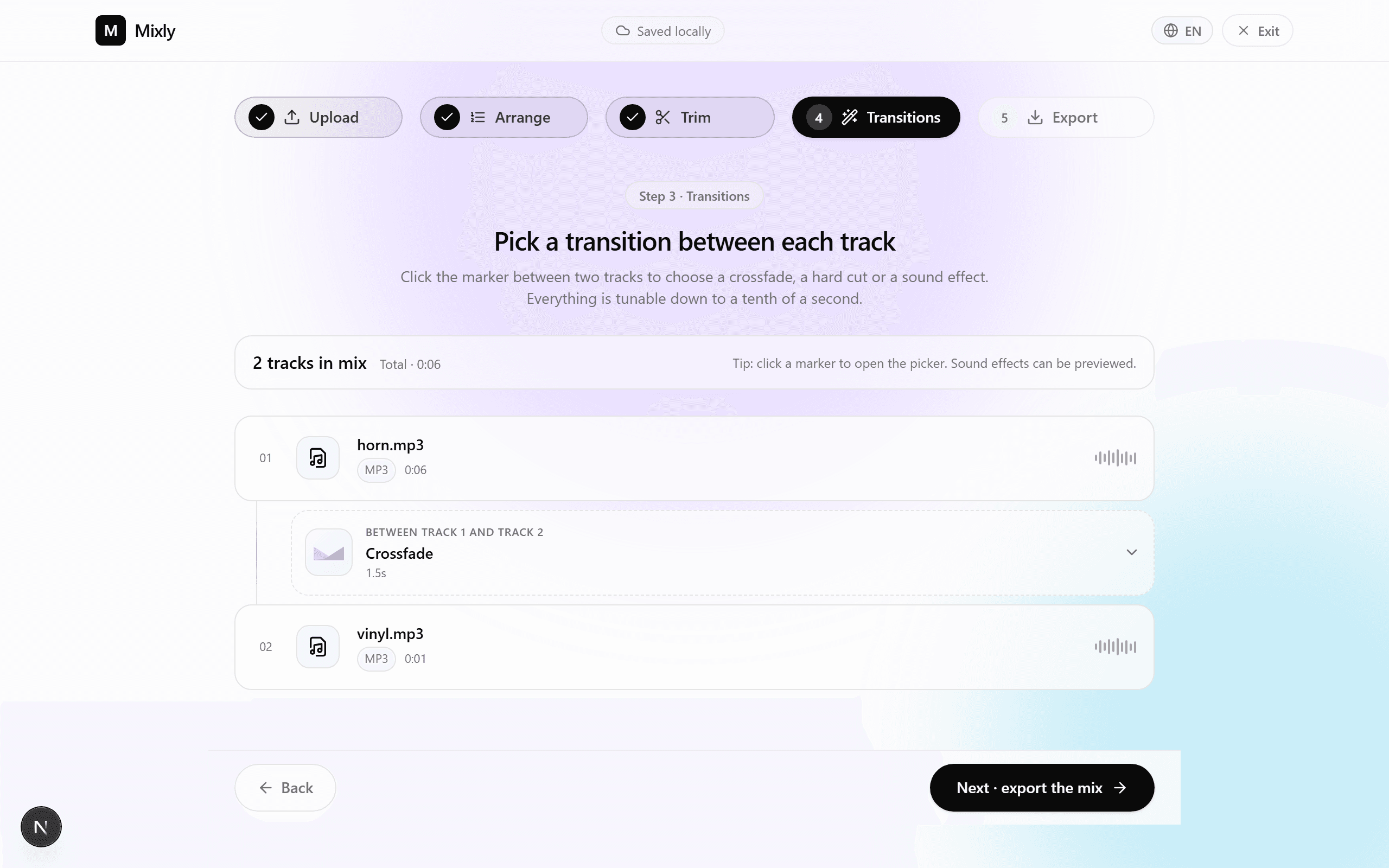
4. Die Übergänge einstellen
Wählen Sie einen Standard-Crossfade (6 s für die Tanzfläche) und verfeinern Sie dann die „Hero“-Übergänge, die alle bemerken werden: Saaleinzug, Eröffnungstanz, letzter Titel.
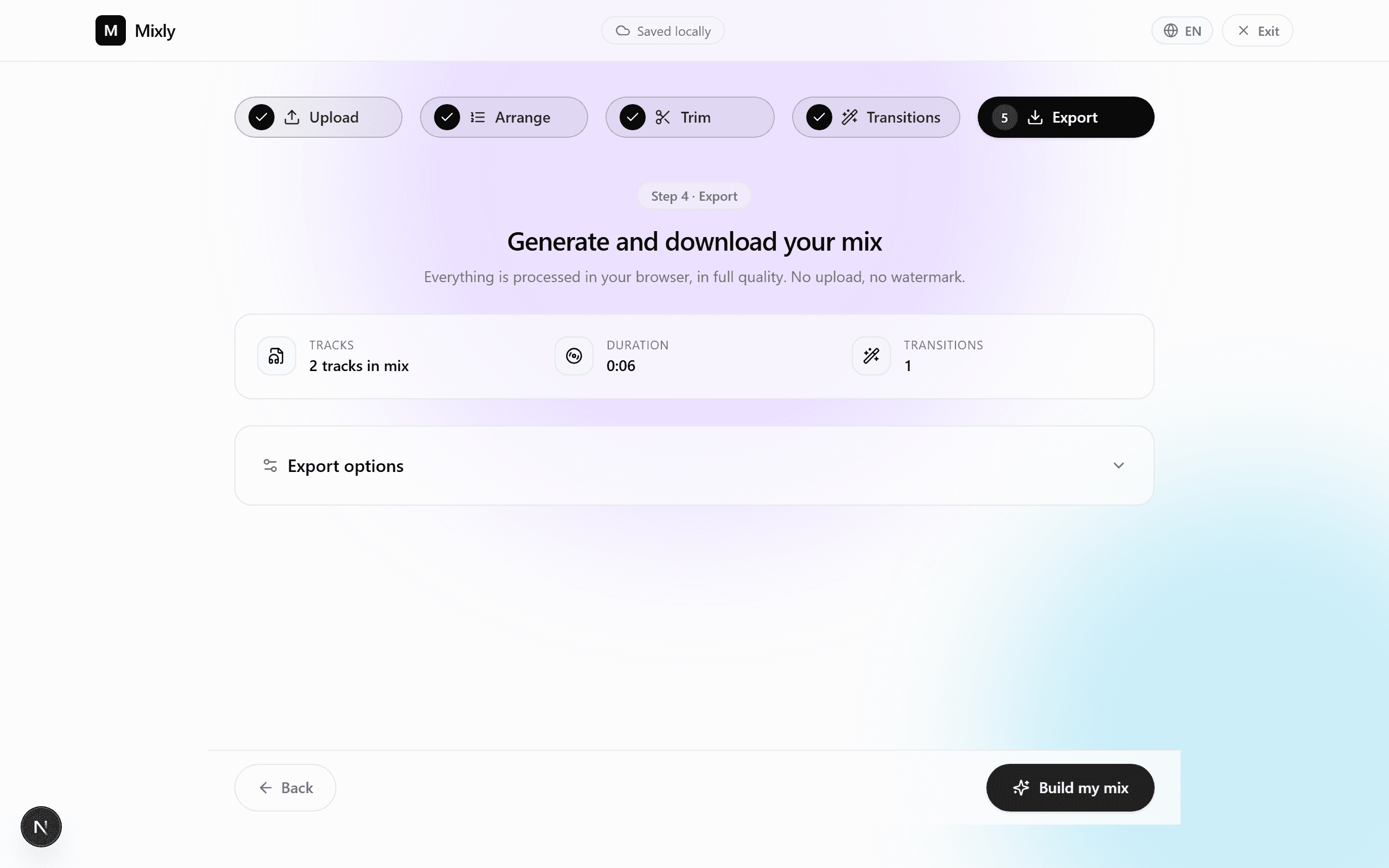
5. Exportieren und unter realen Bedingungen testen
Exportieren Sie als WAV (maximale Qualität) und MP3 320 kbps (Kompatibilitätsreserve). Testen Sie unbedingt auf einem echten Wohnzimmerlautsprecher – nicht über Kopfhörer – mindestens einmal, um Bassübersteuerungen zu erkennen.
Checkliste: T-7, T-1, der Tag selbst
Bei T-7
- Mix fertiggestellt, Reihenfolge von beiden Brautleuten bestätigt.
- Test auf 3 verschiedenen Lautsprechern (Smartphone, Wohnzimmer, Außen-PA).
- Liste der „verbotenen Songs“ an das Team weitergegeben (Ex-Partner, jüngste Trauer usw.).
- Plan B: zweites Wiedergabegerät, zweiter Dateisatz auf USB-Stick.
Bei T-1
- Begehung des Technikbereichs: Steckdosen, Anschlüsse, Umgang mit Außengeräuschen (Nachbarschaft / Gemeinde).
- Referenzlautstärke notiert (wird am Abend je nach Auslastung nachjustiert).
- Briefing des Moderators oder Musikverantwortlichen: Startzeichen für jeden Block.
Am Tag selbst
- Computer im Flugmodus, am Netz, Kopfhörerausgang abgezogen.
- Block „Saaleinzug“ manuell gestartet, nie per Auto-Play.
- Lautstärke in der ersten Stunde der Tanzfläche schrittweise erhöht (Körper füllen den Raum, die Akustik ändert sich).
Fehler, die Sie vermeiden sollten
- Seine Kracher zu früh verbrennen: ein Megamix um 22:30 leert die Fläche um Mitternacht.
- Spotify blind folgen: Spotify-„Radios“ respektieren weder BPM noch narrative Stimmigkeit.
- Die Anlage unterdimensionieren: siehe unseren Artikel Ziel-Lautstärke in dB je Location-Typ.
- Die langsamen Songs vergessen: 4 bis 6 langsame in zwei Mini-Sets bleiben unverzichtbar, selbst 2026.
- 2 Sprachen in denselben Übergang mischen: sprachliche Stimmigkeit zählt mehr, als man denkt, für das Tanzflächengefühl.
Für die vollständige Liste lesen Sie 10 Fehler, die Sie beim Bau Ihres Hochzeitsmix vermeiden sollten.
Fazit
Einen Hochzeitsmix selbst zu bauen bedeutet nicht, einen DJ zu ersetzen – es bedeutet, die Kontrolle zurückzugewinnen über das einzige Element der Feier, das Ihre Gäste tatsächlich in ihrer Erinnerung mit nach Hause nehmen. Die ganze Methode passt in sechs Zeilen: 7 Blöcke, 4×¼-Verhältnisse, BPM-Bogen 100→130→100, Übergänge auf dem Downbeat, doppelter Export WAV + MP3, Wohnzimmer-Test. Der Rest ist eine Frage des Gehörs und der Freude.
Wenn Sie bereit sind, starten Sie Ihren Mix kostenlos. Das Tool nimmt Sie Schritt für Schritt an die Hand.