
Primo ballo degli sposi: la guida completa per mixare due canzoni in 3 minuti
Ballata iniziale, crossfade e ingresso energico: il metodo per trasformare due canzoni speciali in un mix di 3 minuti da coreografare.
Tre minuti. È questo il punto ideale per un'apertura di ballo moderna: abbastanza lungo per raccontare una storia, abbastanza breve perché nessuno si distragga e perfetto per una coreografia memorabile. Lo schema che oggi vince non è più la singola ballata lenta di quattro minuti: è il mashup di due canzoni: una lenta per l'emozione d'apertura, un brano ritmato che apre la pista. Questa guida raccoglie tutto ciò che ti serve per costruirlo da solo: scelta delle canzoni, BPM, compatibilità tonale, la struttura in 6 fasi, la durata del crossfade, la coreografia, l'esportazione e un piano B tecnico per il giorno del matrimonio.
Perché un mashup batte una singola canzone
Per decenni l'apertura di ballo è stata un'unica ballata lenta, osservata in silenzio rispettoso. Funziona ancora, ma ha due debolezze: l'attenzione cala nella seconda metà e la transizione verso la pista deve essere innescata a freddo dal DJ subito dopo.
Il mashup risolve entrambe in un colpo solo. La lenta d'apertura tiene l'emozione per 60-90 secondi, poi un crossfade svela un brano ritmato che apre la pista in modo naturale. I testimoni si uniscono, gli invitati si alzano, il DJ prosegue senza uno stop netto. Per la coppia è anche un modo per esprimere due facce della relazione in un unico momento.
- Attenzione costante: nessun momento calmo più lungo di 30 secondi.
- Emozione + energia: due registri nello stesso momento.
- Ingresso naturale alla festa: nessun segnale manuale necessario dopo.
- Coreografia progressiva: 60 s di passi semplici, 90 s più libera, 30 s collettiva.
Scegliere le due canzoni: i 3 filtri
Un mashup d'apertura di ballo non è una playlist di due brani. Le canzoni devono richiamarsi a vicenda, musicalmente e narrativamente. Tre filtri eliminano il 90 % delle candidate in pochi minuti.
Filtro narrativo
Quale storia vuoi raccontare in tre minuti? Tre forme classiche funzionano quasi sempre:
- Prima / dopo: una lenta che evoca l'incontro, una ritmata che celebra la promessa.
- Una per partner: un brano scelto da ciascuno di voi, abbinati con cura.
- Emozione → festa: l'arco più universale e il più sicuro per un pubblico di tutte le età.
Filtro tempo
La lenta d'apertura vive tra 60 e 80 BPM. La ritmata vive tra 110 e 128 BPM. Troppo vicine (90 → 105 BPM) e il mashup risulta fiacco; troppo lontane (60 → 140 BPM) e il crossfade diventa presto tecnico.
Filtro coppia
Non negoziabile: almeno una delle due canzoni deve significare già qualcosa per la coppia (primo appuntamento, viaggio, proposta). Altrimenti il mashup suona tecnicamente corretto ma emotivamente vuoto.
Per 30 abbinamenti collaudati, vedi Come scegliere le due canzoni della vostra apertura di ballo.
La struttura in 6 fasi su 3 minuti
Le aperture di ballo moderne seguono un copione canonico in 6 fasi. Ogni fase ha la sua durata, il suo ancoraggio musicale e il suo carico coreografico. È questo che permette a qualsiasi coppia — ballerina o no — di reggere tre minuti senza un momento vuoto.
| Tempo | Fase | Battute (4/4) | Ancoraggio / coreografia |
|---|---|---|---|
| 0:00 – 0:20 | Postura d'apertura | 8 battute | Passo base, sguardi, sorriso — nessuna figura complessa |
| 0:20 – 1:10 | Lenta narrativa | 20 battute | Strofe 1 e 2 della lenta, camminata lenta |
| 1:10 – 1:30 | Crescita | 8 battute | Fine del 2° ritornello della lenta, sguardo verso la pista |
| 1:30 – 1:38 | Crossfade | 2–3 battute | Su un downbeat — vedi sezione transizioni |
| 1:38 – 2:30 | Rivelazione ritmata | 20 battute | Ritornello riconoscibile, figura d'effetto, testimoni invitati |
| 2:30 – 3:00 | Collettiva | 12 battute | Testimoni poi invitati si uniscono, uscita su un break |
Regole di compatibilità dei BPM
Il BPM è l'unica metrica musicale oggettiva per capire se due brani si concatenano. Tre regole coprono il 95 % dei mashup reali.
- Scarto ≤ 8 % senza correzione di tempo. Una lenta a 72 BPM si concatena direttamente con una ritmata a 78 BPM (scarto 8 %): invisibile se si rispetta il downbeat.
- Scarto 8-15 %: time-stretch leggero. Allunga la coda della lenta o comprimi l'inizio della ritmata di qualche punto percentuale. Impercettibile con un algoritmo moderno.
- Scarto > 15 %: raddoppia o dimezza. Una lenta a 65 BPM verso una ritmata a 130 BPM è in realtà un mashup coerente nel tempo: 130 = 65×2. L'orecchio percepisce lo stesso battito.
Per un lavoro sul tempo più approfondito, vedi BPM ideale per un primo ballo: 3 regole d'oro.
Tonalità: l'arma segreta delle transizioni invisibili
Due brani possono condividere esattamente lo stesso BPM e suonare comunque sbagliati durante il crossfade: sono tonalità incompatibili. Con la notazione Camelot(usata da ogni strumento DJ moderno), chiunque può verificare la compatibilità in due secondi.
Regola semplice: due brani sono pienamente compatibili se condividono lo stesso numero Camelot (8A → 8A), differiscono di un passo sulla ruota (8A → 9A o 7A), o cambiano modo sullo stesso numero (8A ↔ 8B).
- Lenta 8A → ritmata 8A: la transizione più invisibile.
- Lenta 8A → ritmata 9A: lieve schiarimento — perfetto per elevarsi verso la festa.
- Lenta 8A → ritmata 7A: lieve oscuramento — raro nei matrimoni.
- Lenta 8A → ritmata 3A: mai. Suonerà stonata, anche a basso volume.
Crossfade: 5, 10 o 15 secondi?
La decisione più difficile di tutto il primo ballo. Matrice decisionale:
- 3-5 s: se i due brani sono già nella stessa famiglia (scarto BPM < 8 %). Rapido, sorprendente.
- 6-10 s: predefinito per la maggior parte dei mashup. Otto battute perché il passo si trasformi con la musica.
- 11-15 s: se i due brani sono molto contrastanti (ballata al piano → EDM). Aggiungi un calo volontario di −3 dB a metà fade per attenuare l'impatto.
Tre esempi audio da ascoltare in Crossfade di 5, 10 o 15 secondi?
Costruisci il tuo mashup passo dopo passo
Guida completa con MixClap. Ogni strumento moderno segue un flusso simile — MixClap automatizza solo i passaggi che normalmente richiedono un orecchio professionale: rilevamento dei BPM, allineamento dei downbeat, normalizzazione del volume.
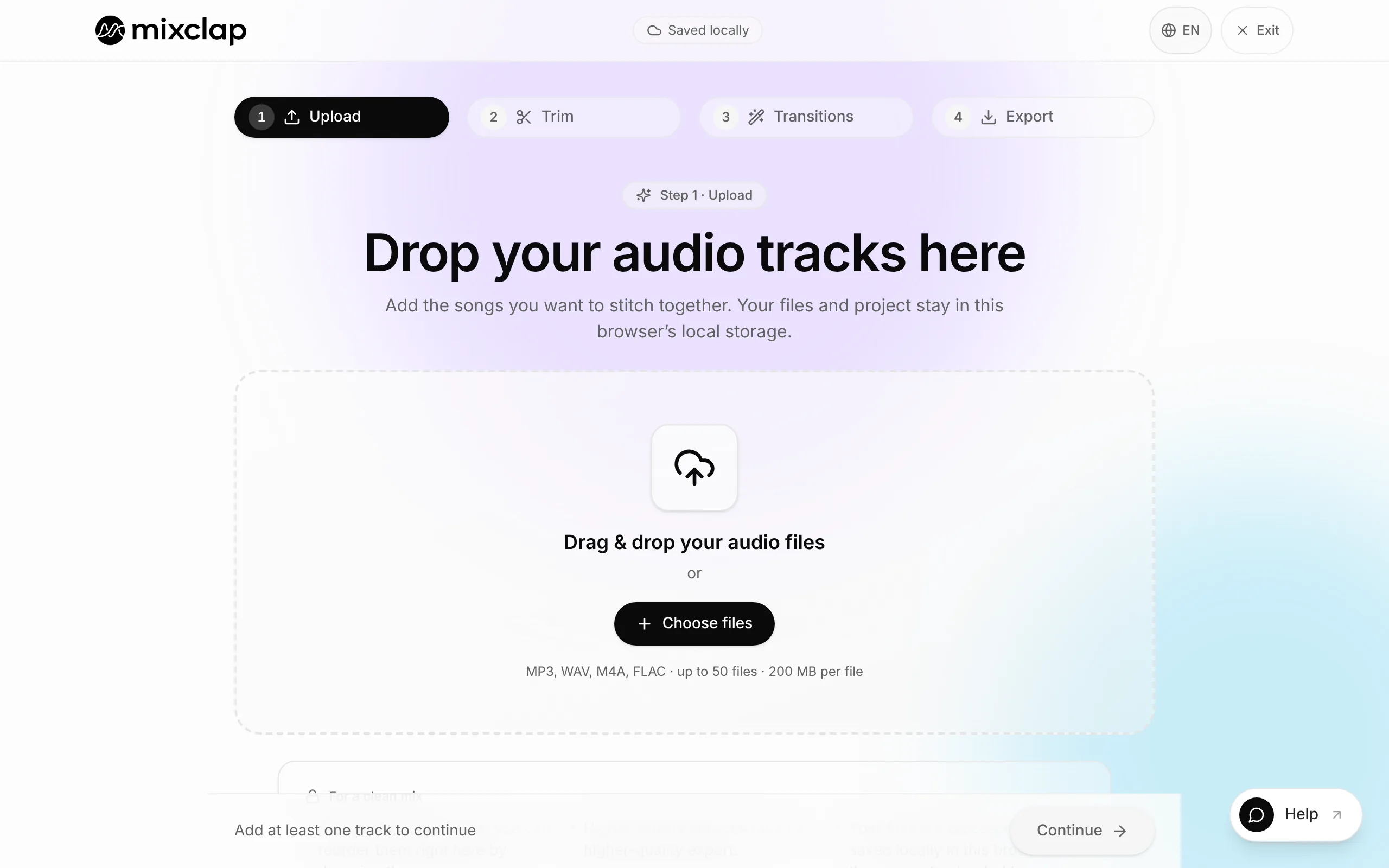
1. Importa entrambi i brani
Trascina la lenta e la ritmata. Ogni traccia viene analizzata automaticamente (BPM, durata, energia, punti di struttura).
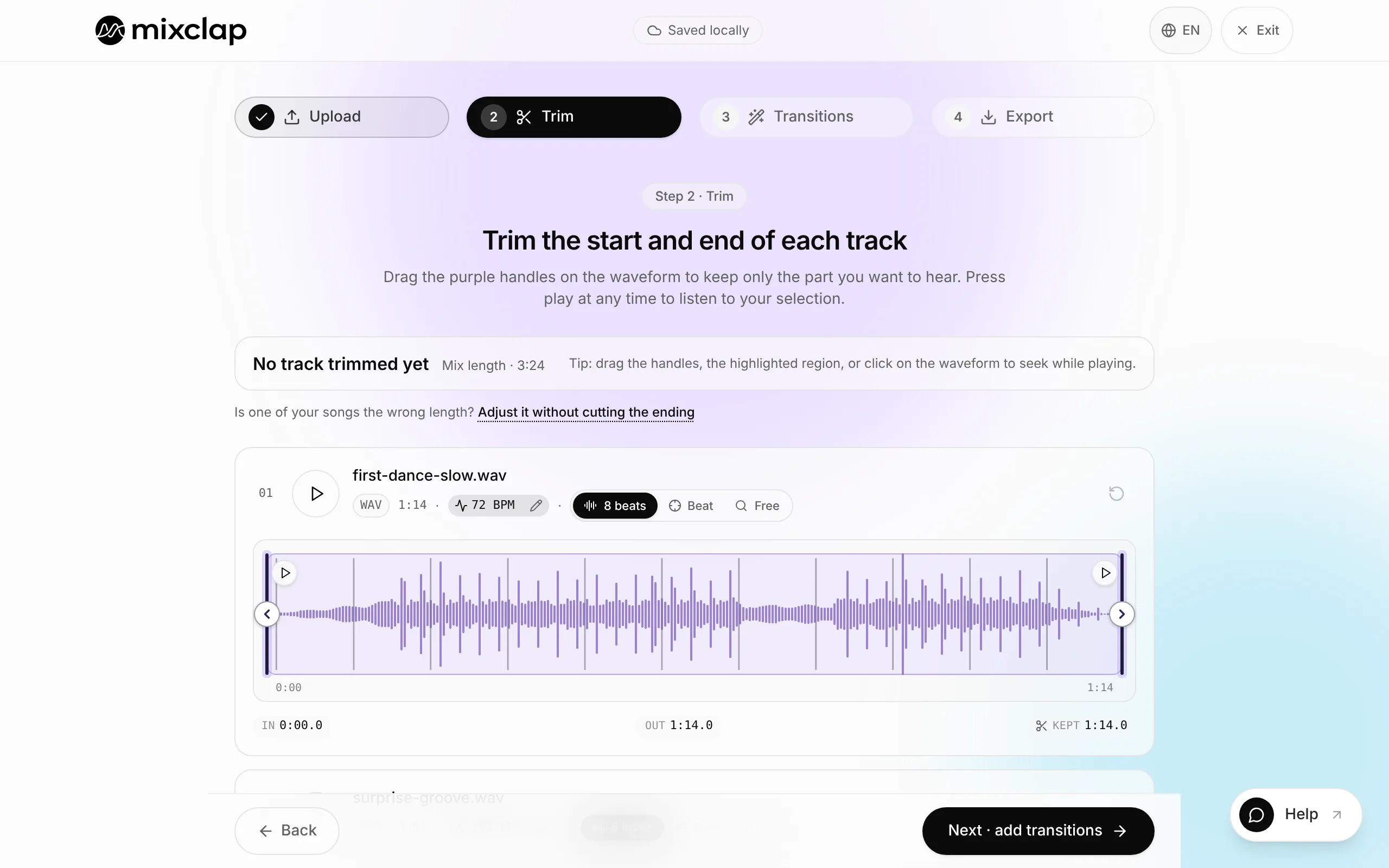
2. Imposta i punti di entrata e uscita
Sulla lenta, parti dalla prima strofa (evita lunghe intro strumentali). Sulla ritmata, parti appena prima del primo ritornello, dove il groove è già assestato: è questo che crea la sensazione «la pista si apre da sola».
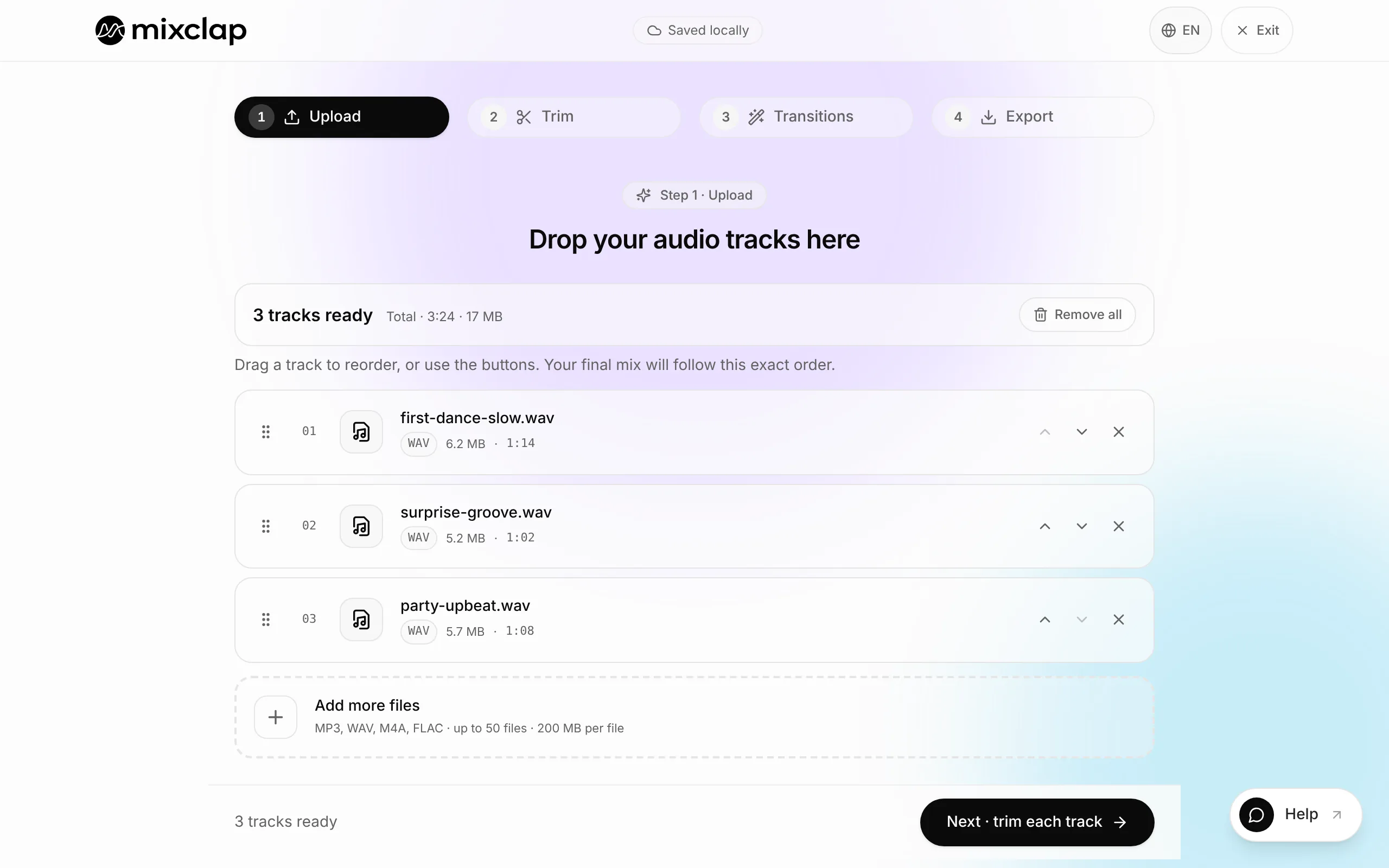
3. Allinea i downbeat
La magia di un mashup vive in un dettaglio: la transizione cade esattamente sul primo tempo di una battuta. Segna il downbeat di chiusura della lenta (di solito l'ultima battuta del ritornello 2) e il downbeat d'ingresso della ritmata (il primo colpo di rullante dopo l'intro).
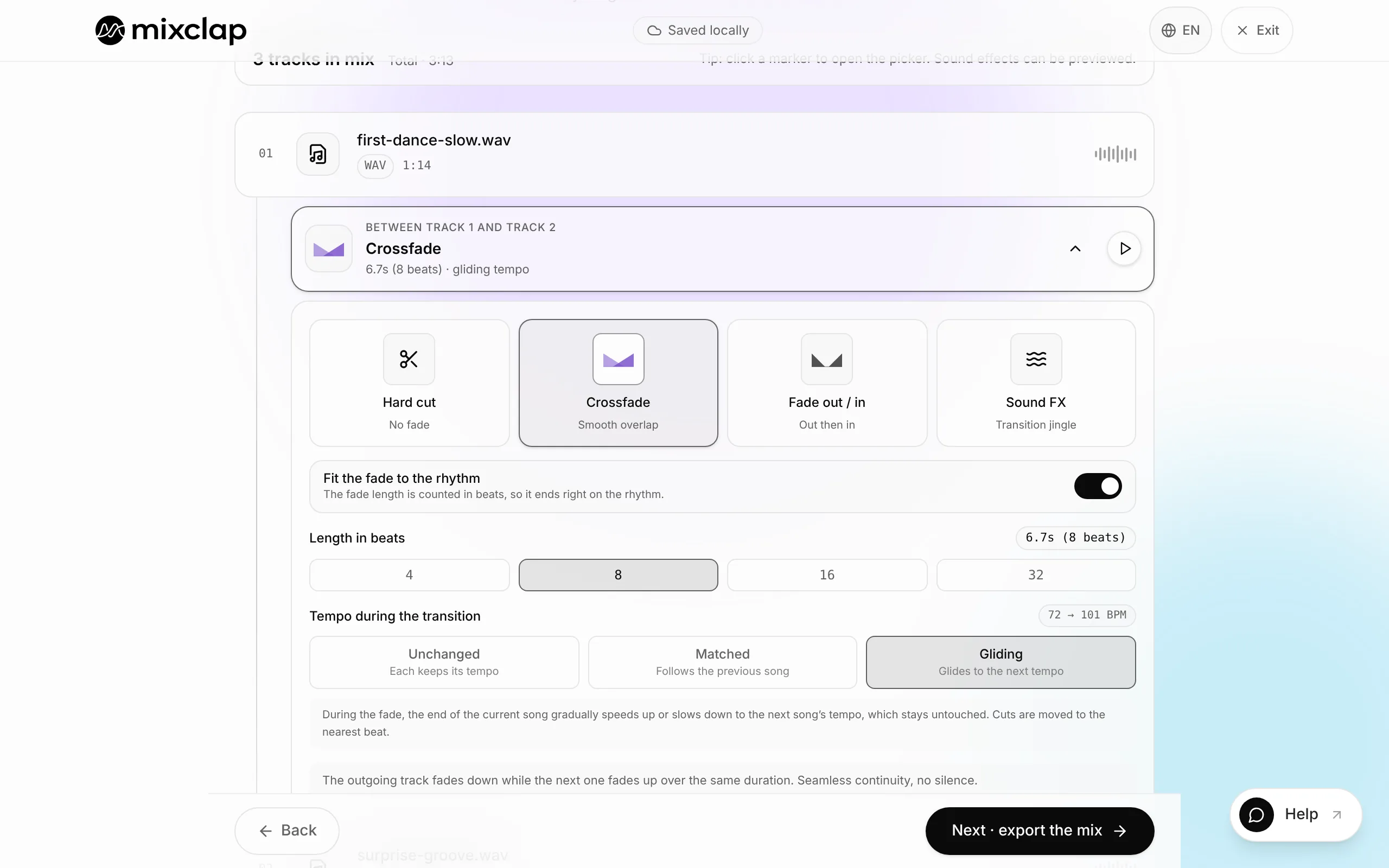
4. Regola il crossfade
Scegli la durata del fade (matrice sopra). Preferisci una curva equal-power a quella lineare: preserva il volume percepito al centro del crossfade, dove l'orecchio è più sensibile.
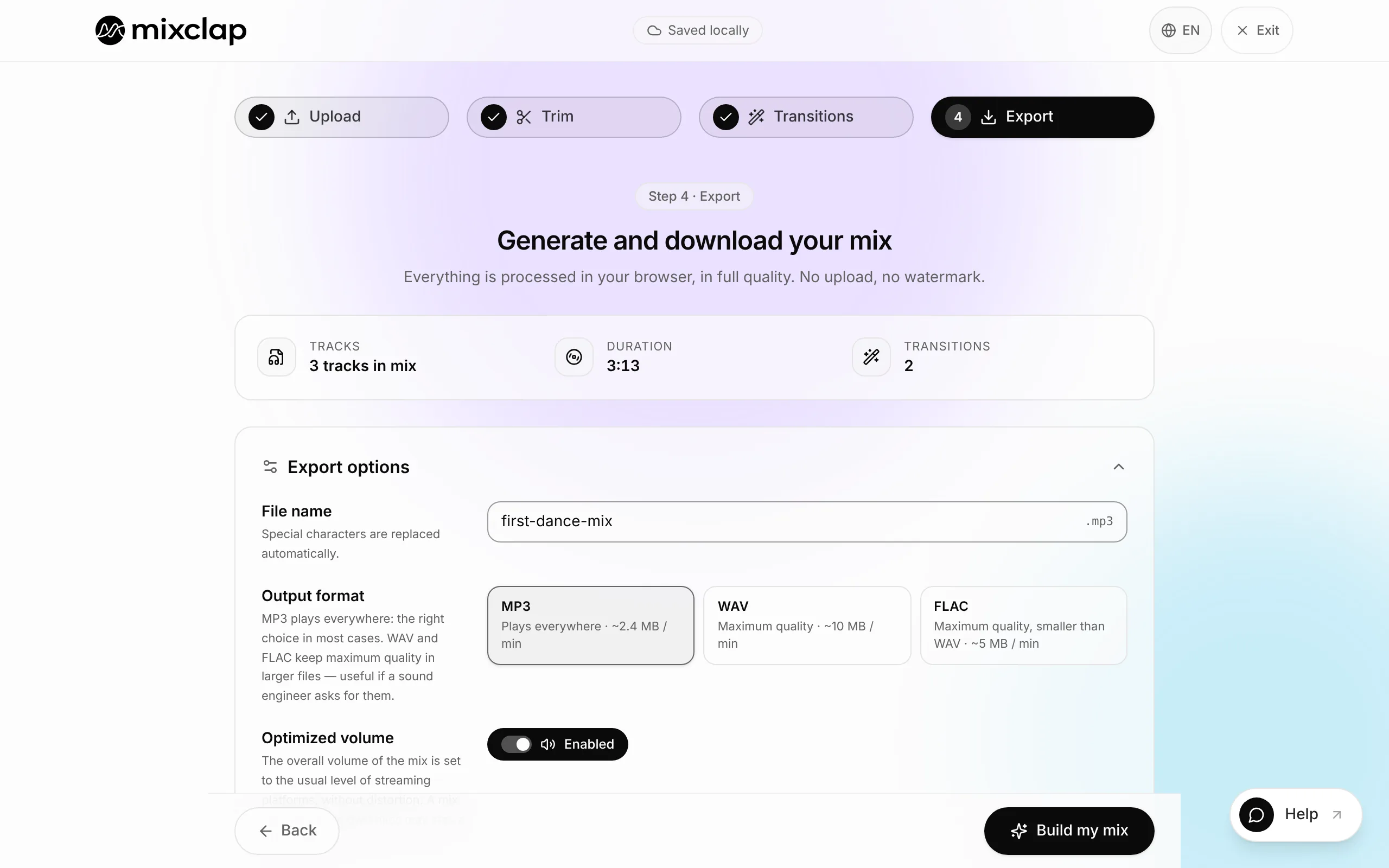
5. Esporta in WAV + MP3
Esporta in WAV 44,1 kHz / 16 bit per la massima qualità e in MP3 320 kbps come riserva. Metti entrambi su due chiavette USB. Il primo ballo è il momento peggiore per scoprire che un file non si riproduce.
Coreografare 3 minuti: il metodo del tag sonoro
La maggior parte delle coppie finisce con una coreografia «ricordata a metà» in pista. La causa è quasi sempre la stessa: hanno memorizzato sequenze di passi, non ancoraggi musicali. Il metodo del tag sonoro inverte l'ordine: dai un nome a 6 momenti musicali distinti (il «tag») e associ un gesto memorabile a ciascuno. I riferimenti audio battono i conteggi «5-6-7-8» ogni volta.
Esempio sulla fase di crescita della nostra tabella — tag: «il piano si ferma». Gesto: sguardo deciso verso la pista, le mani si separano. Ripetilo 10 volte e il tuo corpo lo farà al segnale giusto, anche sotto stress.
Versione completa con esempi video e piano di prove in Coreografare un primo ballo di 3 minuti.
15 mashup che funzionano: estratto commentato
Un assaggio degli abbinamenti che vediamo più spesso nelle aperture di ballo riuscite degli ultimi 18 mesi. Elenco completo e analisi in 15 mashup per il primo ballo che funzionano davvero.
| Lenta | Ritmata | BPM | Crossfade | |
|---|---|---|---|---|
| Perfect — Ed Sheeran | → | Marry You — Bruno Mars | 63 → 126 | 9 s, equal-power |
| At Last — Etta James | → | Hey Ya! — Outkast | 69 → 160 | 11 s, percepito 1:2 |
| Make You Feel My Love — Adele | → | Signed, Sealed, Delivered — Stevie Wonder | 68 → 136 | 8 s, rapporto 1:2 |
| Thinking Out Loud — Ed Sheeran | → | Can't Stop the Feeling — Justin Timberlake | 78 → 113 | 7 s, equal-power |
| All of Me — John Legend | → | I Wanna Dance With Somebody — W. Houston | 63 → 119 | 9 s, calo −3 dB |
Piano B tecnico per il giorno del matrimonio
- Export + originale separati: se il mashup fallisce, ripiega sulla lenta non modificata.
- Due chiavette USB formattate in exFAT (funzionano su ogni sistema).
- Riproduci da un laptop in modalità aereo, mai da un telefono.
- Prova sull'impianto reale della location: l'80 % dei problemi emerge lì.
- Invia il mashup al DJ o al presentatore 7 giorni prima: vedi Preparare un mix di matrimonio pronto da consegnare al tuo DJ.
Errori da evitare
- Tenere una lunga intro strumentale: 12 secondi sembrano 45 in pista.
- Crossfade fuori dal downbeat: sensazione «storta» garantita.
- Ritmata troppo veloce (> 130 BPM): gli invitati non hanno avuto tempo di alzarsi.
- Troppe figure da professionista: 4 semplici e pulite battono 12 approssimative.
- Nessun test su una cassa da salotto: le cuffie nascondono il sibilo della transizione.
Checklist per l'intero matrimonio nel pilastro del cluster: Mix di matrimonio: la guida completa.
Conclusione
Un ottimo primo ballo non è una lenta allungata, né un mashup tecnicamente impeccabile. Sono tre minuti in cui due mondi si incontrano: l'emozione di una canzone che conta per la coppia, l'energia di un brano che fa alzare tutti. Il metodo sta in sei righe: 6 fasi, scarto BPM < 8 % o rapporto 1:2, tonalità Camelot compatibili, downbeat allineati, crossfade equal-power 6-10 s, doppia esportazione WAV + MP3.
Quando sei pronto, avvia il tuo mashup gratuitamente. Lo strumento ti guida dall'importazione all'esportazione.