
Wedding First Dance: The Complete Guide to Mixing Two Songs Into a 3-Minute Mash-Up
Opening slow, cross-fade, upbeat reveal — the method to turn two meaningful songs into a 3-minute choreographable mix.
Drei Minuten. Das ist der optimale Wert für einen modernen Eröffnungstanz: lang genug, um eine Geschichte zu erzählen, kurz genug, damit niemand abschaltet, und genau richtig für eine einprägsame Choreografie. Das Muster, das heute gewinnt, ist nicht mehr die einzelne vierminütige Ballade – es ist das Zwei-Songs-Mashup: eine langsame Nummer für die Eröffnungsemotion, ein flotter Track, der die Tanzfläche öffnet. Dieser Leitfaden bündelt alles, was du brauchst, um es selbst zu bauen: Songauswahl, BPM, Tonart-Kompatibilität, die 6-Phasen-Struktur, die Crossfade-Länge, die Choreografie, den Export und einen technischen Plan B für den großen Tag.
Warum ein Mashup einen einzelnen Song schlägt
Jahrzehntelang war der Eröffnungstanz eine einzelne langsame Ballade, in respektvoller Stille betrachtet. Das funktioniert immer noch, hat aber zwei Schwächen: Die Aufmerksamkeit sinkt in der zweiten Hälfte, und der Übergang zur Tanzfläche muss danach vom DJ kalt ausgelöst werden.
Das Mashup behebt beides auf einen Schlag. Die Eröffnungs-Ballade hält die Emotion 60–90 Sekunden lang, dann enthüllt ein Crossfade einen flotten Track, der die Tanzfläche ganz natürlich öffnet. Die Trauzeugen kommen dazu, die Gäste stehen auf, der DJ macht ohne harten Neustart weiter. Für das Paar ist es zugleich eine Möglichkeit, zwei Facetten der Beziehung in einem einzigen Moment auszudrücken.
- Anhaltende Aufmerksamkeit: kein ruhiger Moment länger als 30 Sekunden.
- Emotion + Energie: zwei Register im selben Moment.
- Natürlicher Übergang zur Feier: danach ist kein manueller Einsatz nötig.
- Progressive Choreografie: 60 s einfache Schritte, 90 s freier, 30 s gemeinsam.
Die zwei Songs auswählen: die 3 Filter
Ein Eröffnungstanz-Mashup ist keine Zwei-Titel-Playlist. Die Songs müssen sich aufeinander beziehen, musikalisch und erzählerisch. Drei Filter schließen in Minuten 90 % der Kandidaten aus.
Erzählfilter
Welche Geschichte willst du in drei Minuten erzählen? Drei klassische Formen funktionieren fast immer:
- Davor / danach: eine langsame Nummer, die das Kennenlernen heraufbeschwört, eine flotte, die das Versprechen feiert.
- Einer pro Partner: ein von jedem von euch gewählter Track, sorgfältig kombiniert.
- Emotion → Feier: der universellste Bogen und der sicherste für ein Publikum aller Altersgruppen.
Tempofilter
Die Eröffnungs-Ballade lebt zwischen 60 und 80 BPM. Der flotte Track lebt zwischen 110 und 128 BPM. Zu nah beieinander (90 → 105 BPM) und das Mashup wirkt lahm; zu weit auseinander (60 → 140 BPM) und der Crossfade wird schnell technisch.
Paar-Filter
Nicht verhandelbar: Mindestens einer der beiden Songs muss dem Paar bereits etwas bedeuten (erstes Date, Roadtrip, Antrag). Sonst klingt das Mashup technisch korrekt, aber emotional hohl.
Für 30 geprüfte Paarungen siehe So wählt ihr die zwei Songs für euren Eröffnungstanz.
Die 6-Phasen-Struktur auf 3 Minuten
Moderne Eröffnungstänze folgen einem kanonischen 6-Phasen-Drehbuch. Jede Phase hat ihre Dauer, ihren musikalischen Anker und ihre choreografische Last. Genau das lässt jedes Paar – ob Tänzer oder nicht – drei Minuten ohne leeren Moment durchhalten.
| Zeit | Phase | Takte (4/4) | Anker / Choreografie |
|---|---|---|---|
| 0:00 – 0:20 | Eröffnungshaltung | 8 Takte | Grundschritt, Blicke, Lächeln – keine komplexe Figur |
| 0:20 – 1:10 | Erzählende Ballade | 20 Takte | Strophe 1 & 2 der Ballade, langsames Gehen |
| 1:10 – 1:30 | Aufbau | 8 Takte | Ende des 2. Refrains der Ballade, Blick zur Tanzfläche |
| 1:30 – 1:38 | Crossfade | 2–3 Takte | Auf einem Downbeat – siehe Übergangsabschnitt |
| 1:38 – 2:30 | Flotte Enthüllung | 20 Takte | Erkennbarer Refrain, Signaturfigur, Trauzeugen eingeladen |
| 2:30 – 3:00 | Gemeinsam | 12 Takte | Trauzeugen, dann Gäste kommen dazu, Ausstieg auf einem Break |
BPM-Kompatibilitätsregeln
BPM ist die einzige objektive musikalische Kennzahl dafür, ob zwei Tracks ineinandergreifen. Drei Regeln decken 95 % der realen Mashups ab.
- Abstand ≤ 8 % ohne Tempokorrektur. Eine Ballade mit 72 BPM geht direkt in einen flotten Track mit 78 BPM über (8 % Abstand) – unsichtbar, wenn der Downbeat eingehalten wird.
- Abstand 8–15 %: leichtes Time-Stretch. Dehne das Ende der Ballade oder stauche den Anfang des flotten Tracks um wenige Prozent. Mit einem modernen Algorithmus unhörbar.
- Abstand > 15 %: verdoppeln oder halbieren. Eine Ballade mit 65 BPM in einen flotten Track mit 130 BPM ist tatsächlich ein tempokohärentes Mashup: 130 = 65×2. Das Ohr hört denselben Puls.
Für tiefergehende Tempoarbeit siehe Ideales BPM für einen ersten Tanz: 3 goldene Regeln.
Tonart: die Geheimwaffe für unsichtbare Übergänge
Zwei Tracks können exakt dasselbe BPM teilen und beim Crossfade trotzdem falsch klingen – das sind inkompatible Tonarten. Mit der Camelot-Notation (von jedem modernen DJ-Tool verwendet) kann jeder die Kompatibilität in zwei Sekunden prüfen.
Einfache Regel: Zwei Tracks sind voll kompatibel, wenn sie dieselbe Camelot-Zahl teilen (8A → 8A), sich um einen Schritt auf dem Rad unterscheiden (8A → 9A oder 7A) oder bei derselben Zahl den Modus wechseln (8A ↔ 8B).
- Ballade 8A → flott 8A: der unsichtbarste Übergang.
- Ballade 8A → flott 9A: leichte Aufhellung – perfekt, um in die Feier zu heben.
- Ballade 8A → flott 7A: leichte Abdunklung – bei Hochzeiten selten.
- Ballade 8A → flott 3A: niemals. Es klingt schief, selbst bei geringer Lautstärke.
Crossfade: 5, 10 oder 15 Sekunden?
Die schwierigste Entscheidung des ganzen ersten Tanzes. Entscheidungsmatrix:
- 3–5 s: wenn die zwei Tracks bereits zur selben Familie gehören (BPM-Abstand < 8 %). Knackig, überraschend.
- 6–10 s: Standard für die Mehrheit der Mashups. Acht Takte, damit sich der Schritt mit der Musik wandelt.
- 11–15 s: wenn die zwei Tracks stark kontrastieren (Klavierballade → EDM). Füge in der Fade-Mitte eine gewollte −3-dB-Absenkung hinzu, um den Aufprall abzumildern.
Drei Audiobeispiele zum Anhören in Crossfade von 5, 10 oder 15 Sekunden?
Bau dein Mashup Schritt für Schritt
Vollständige Anleitung mit MixClap. Jedes moderne Tool folgt einem ähnlichen Ablauf – MixClap automatisiert nur die Schritte, die normalerweise ein Profi-Ohr erfordern: BPM-Erkennung, Downbeat-Ausrichtung, Lautheitsnormalisierung.
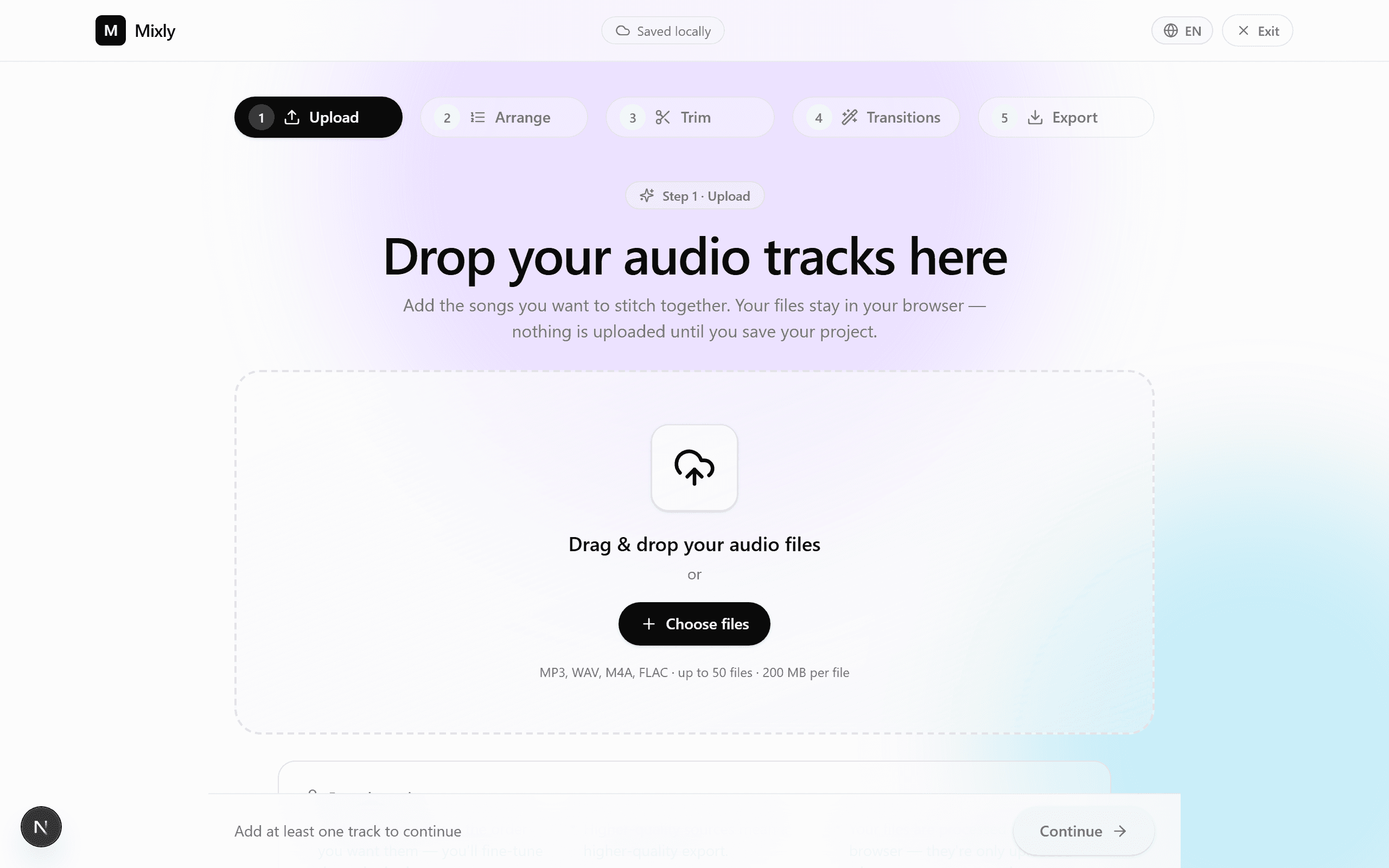
1. Beide Tracks importieren
Zieh die Ballade und den flotten Track hinein. Jede Spur wird automatisch analysiert (BPM, Länge, Energie, Strukturmarken).
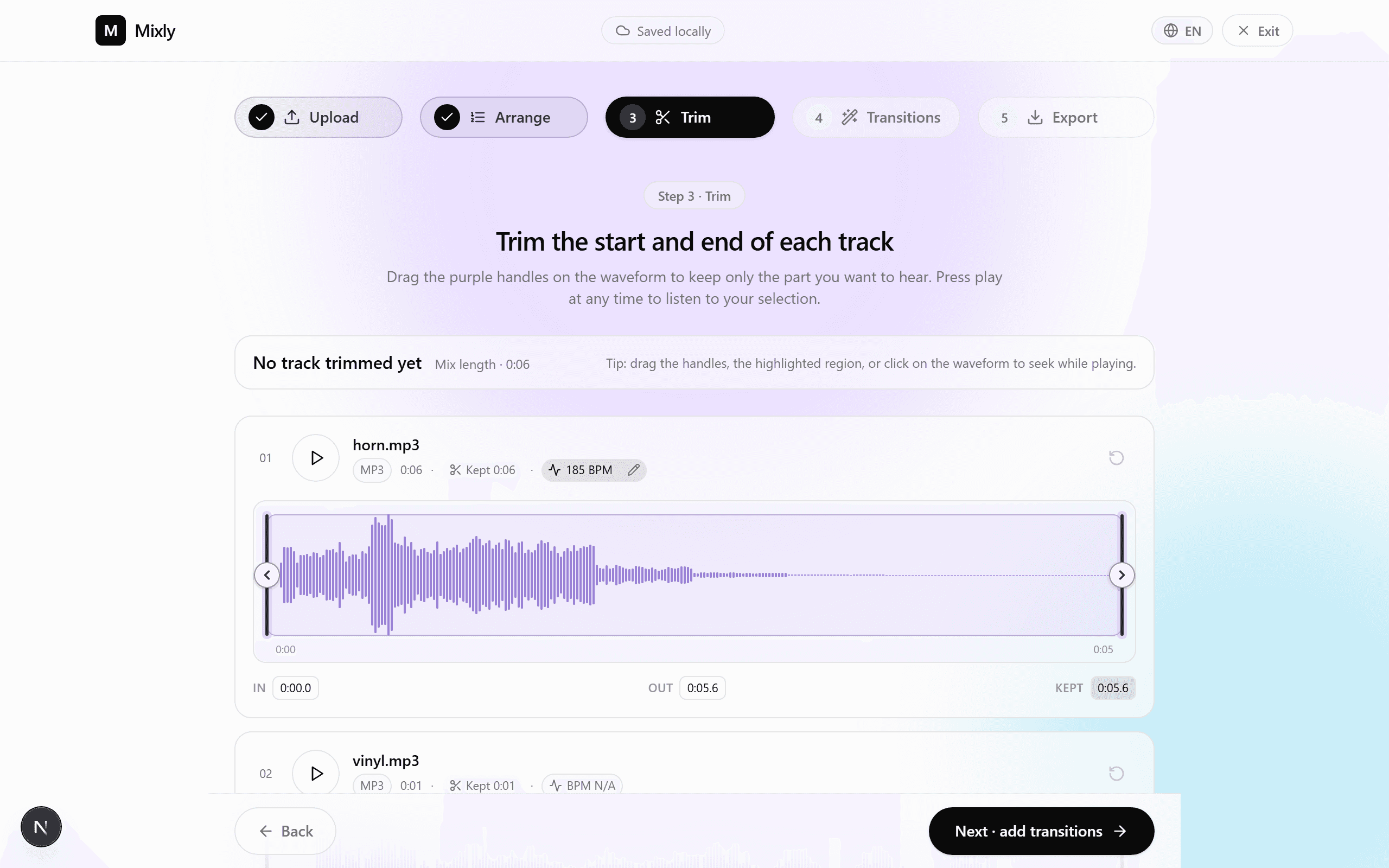
2. Ein- und Ausstiegspunkte setzen
Bei der Ballade auf der ersten Strophe beginnen (lange Instrumental-Intros überspringen). Beim flotten Track kurz vor dem ersten Refrain starten, wo der Groove schon steht – das erzeugt das Gefühl, „die Tanzfläche öffnet sich von selbst“.
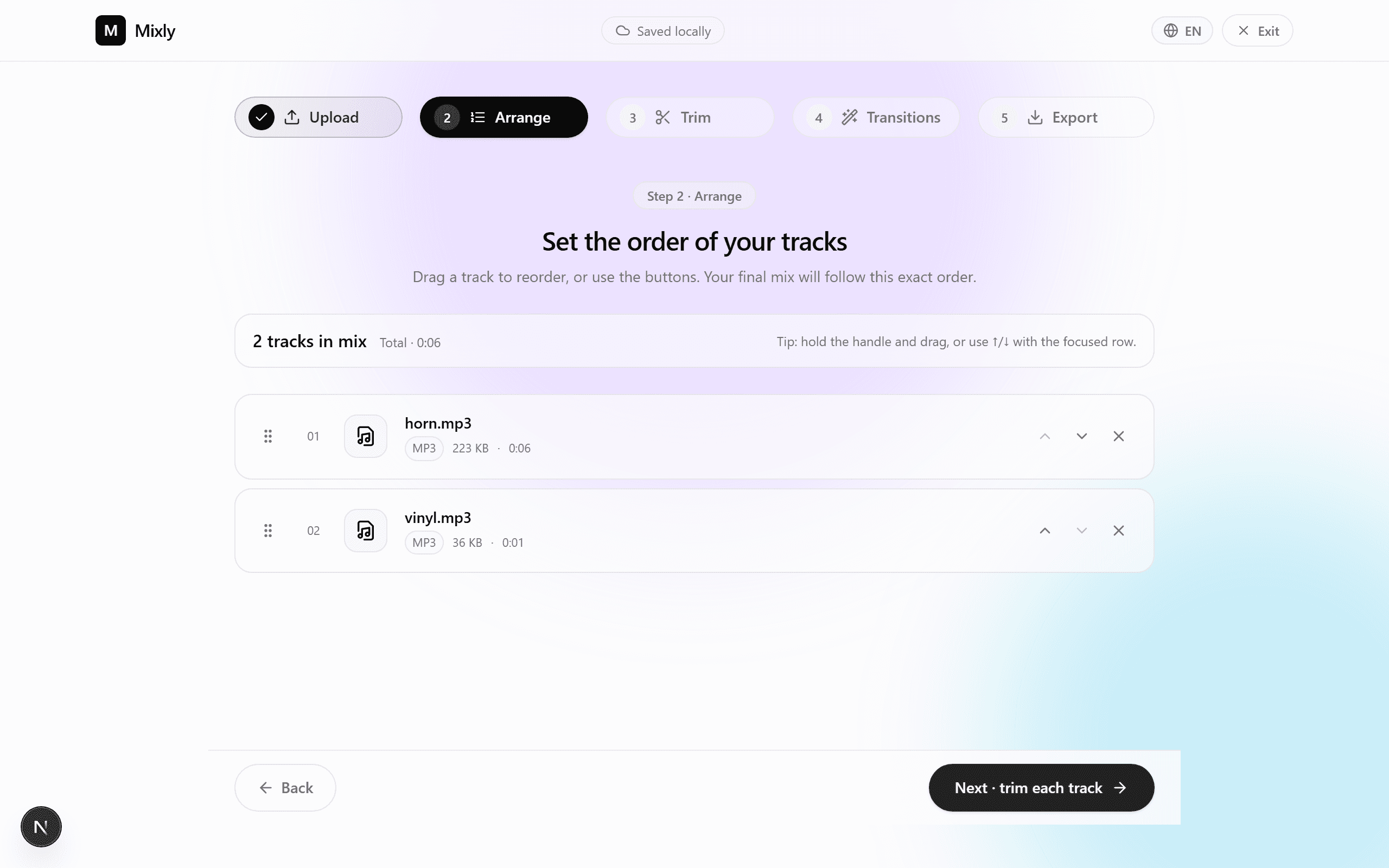
3. Downbeats ausrichten
Die Magie eines Mashups lebt in einem Detail: Der Übergang landet exakt auf dem ersten Schlag eines Takts. Markiere den Schluss-Downbeat der Ballade (meist der letzte Takt von Refrain 2) und den Einstiegs-Downbeat des flotten Tracks (der erste Snare-Schlag nach dem Intro).
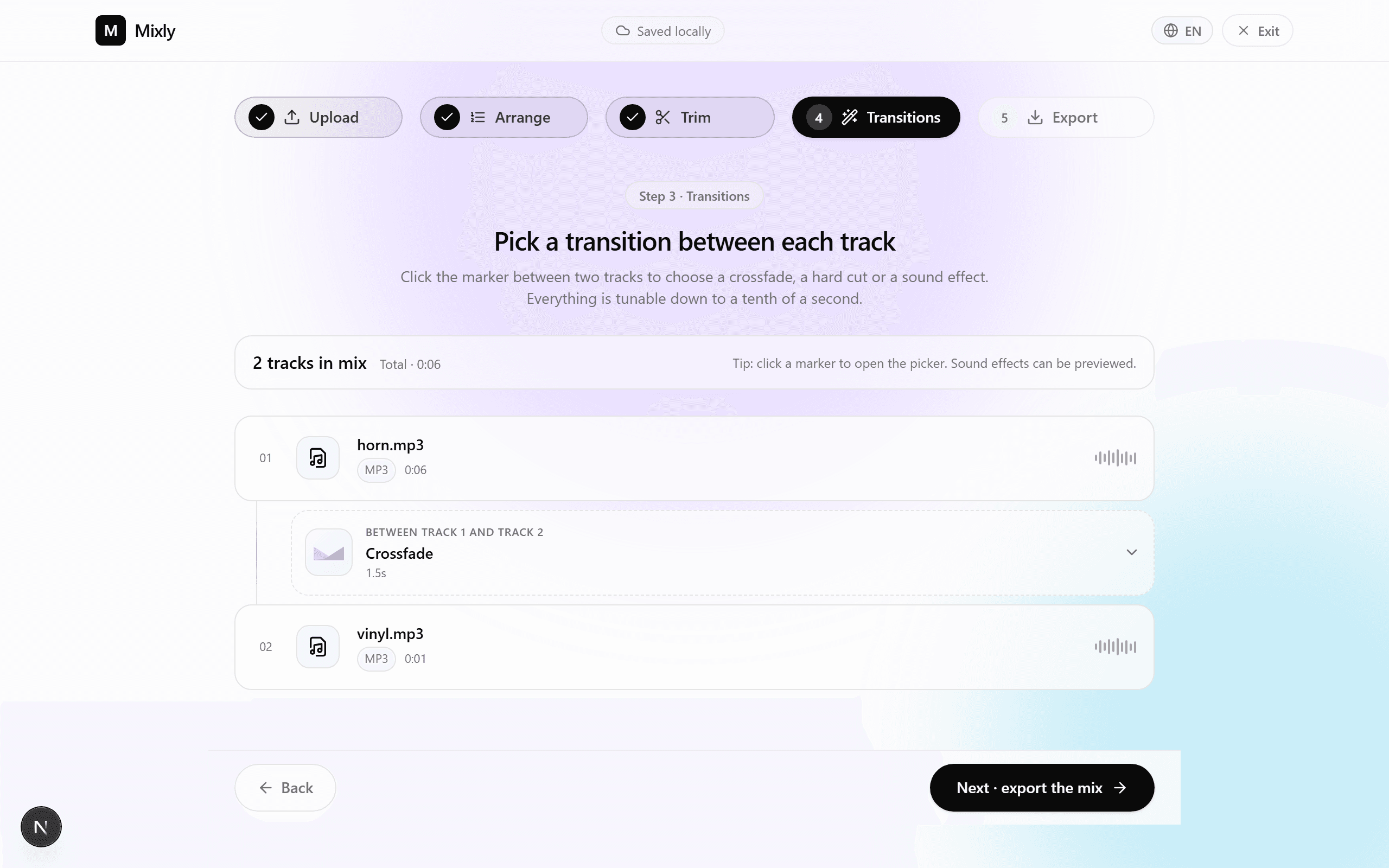
4. Den Crossfade abstimmen
Wähle die Fade-Länge (Matrix oben). Bevorzuge eine Equal-Power-Kurve gegenüber der linearen: Sie erhält die wahrgenommene Lautheit in der Mitte des Crossfades, wo das Ohr am empfindlichsten ist.
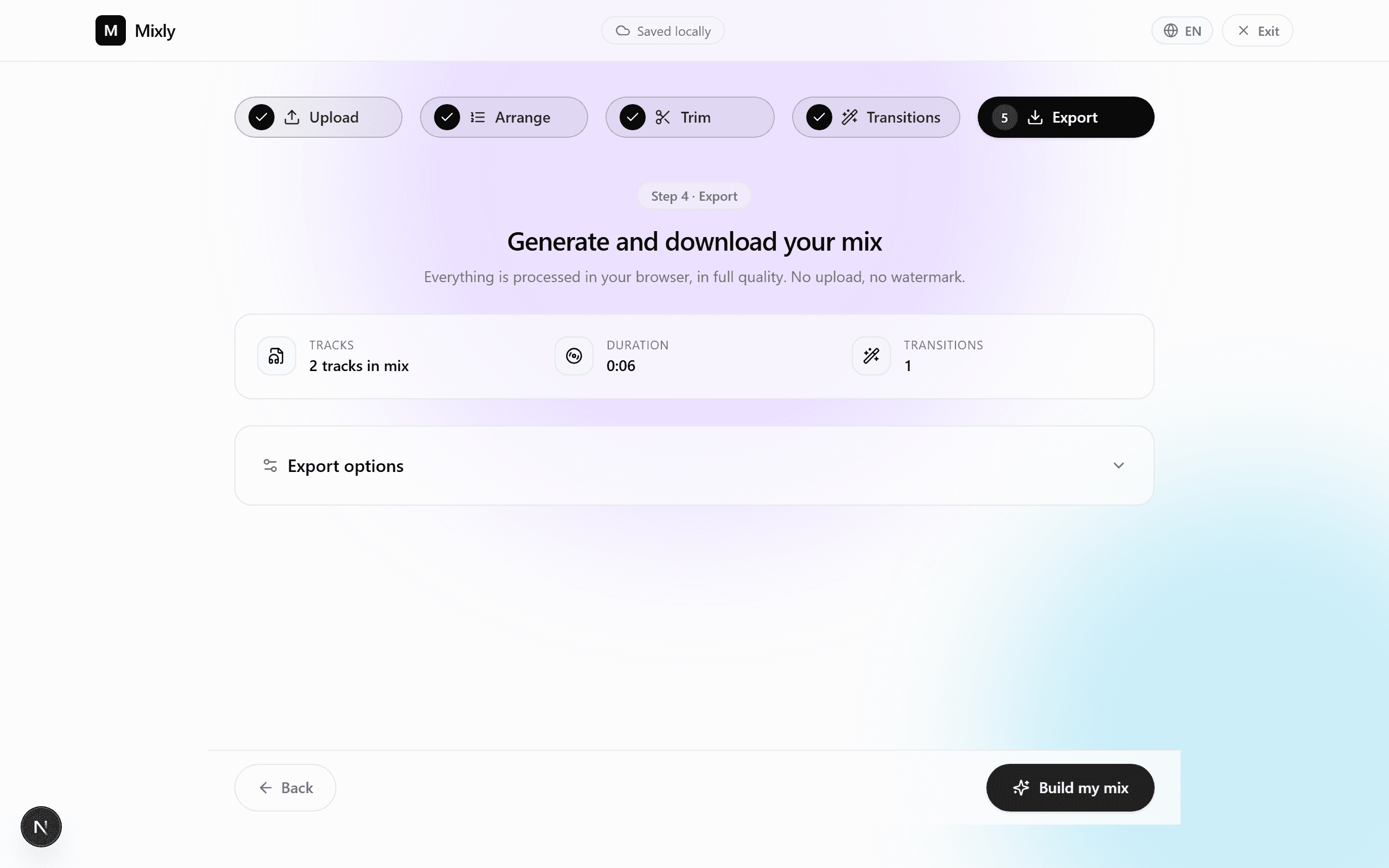
5. Als WAV + MP3 exportieren
Exportiere nach WAV 44,1 kHz / 16 Bit für maximale Qualität und MP3 320 kbps als Rückfall. Leg beide auf zwei USB-Sticks. Der erste Tanz ist der denkbar schlechteste Moment, um festzustellen, dass eine Datei nicht abspielt.
3 Minuten choreografieren: die Sound-Tag-Methode
Die meisten Paare landen mit einer „halb erinnerten“ Choreografie auf der Tanzfläche. Die Ursache ist fast immer dieselbe: Sie haben Schrittfolgen auswendig gelernt, keine musikalischen Anker. Die Sound-Tag-Methode dreht die Reihenfolge um: Du benennst 6 unterschiedliche musikalische Momente (den „Tag“) und knüpfst an jeden eine einprägsame Geste. Audio-Einsätze schlagen „5-6-7-8“-Zählungen jedes Mal.
Beispiel für die Aufbauphase aus unserer Tabelle – Tag: „das Klavier hört auf“. Geste: selbstbewusster Blick zur Tanzfläche, die Hände lösen sich. Wiederhol es 10-mal und dein Körper macht es auf Stichwort, sogar unter Stress.
Vollständige Version mit Videobeispielen und Probeplan in Einen 3-minütigen ersten Tanz choreografieren.
15 Mashups, die funktionieren: kommentierter Auszug
Eine Kostprobe der Paarungen, die wir in erfolgreichen Eröffnungstänzen der letzten 18 Monate am häufigsten sehen. Vollständige Liste und Analyse in 15 Eröffnungstanz-Mashups, die wirklich funktionieren.
| Ballade | Flott | BPM | Crossfade | |
|---|---|---|---|---|
| Perfect — Ed Sheeran | → | Marry You — Bruno Mars | 63 → 126 | 9 s, Equal-Power |
| At Last — Etta James | → | Hey Ya! — Outkast | 69 → 160 | 11 s, wahrgenommen 1:2 |
| Make You Feel My Love — Adele | → | Signed, Sealed, Delivered — Stevie Wonder | 68 → 136 | 8 s, Verhältnis 1:2 |
| Thinking Out Loud — Ed Sheeran | → | Can't Stop the Feeling — Justin Timberlake | 78 → 113 | 7 s, Equal-Power |
| All of Me — John Legend | → | I Wanna Dance With Somebody — W. Houston | 63 → 119 | 9 s, −3-dB-Absenkung |
Technischer Plan B für den großen Tag
- Export + Original getrennt: Wenn das Mashup versagt, greif auf die unbearbeitete Ballade zurück.
- Zwei USB-Sticks, formatiert als exFAT (funktioniert auf jedem OS).
- Von einem Laptop abspielen im Flugmodus, niemals vom Handy.
- Auf der echten PA des Veranstaltungsorts testen – 80 % der Probleme zeigen sich dort.
- Das Mashup 7 Tage vorher an den DJ oder Moderator senden – siehe Einen übergabefertigen Hochzeitsmix für deinen DJ vorbereiten.
Zu vermeidende Fehler
- Ein langes Instrumental-Intro behalten: 12 Sekunden fühlen sich auf der Tanzfläche wie 45 an.
- Crossfade neben dem Downbeat: garantiertes „schiefes“ Gefühl.
- Flotter Track zu schnell (> 130 BPM): Die Gäste hatten keine Zeit aufzustehen.
- Zu viele Profi-Figuren: 4 einfache, saubere schlagen 12 schludrige.
- Kein Test am Wohnzimmerlautsprecher: Kopfhörer verbergen das Übergangsrauschen.
Checkliste für die ganze Hochzeit im Cluster-Pillar: Hochzeitsmix: der komplette Leitfaden.
Fazit
Ein großartiger erster Tanz ist weder eine gedehnte Ballade noch ein technisch makelloses Mashup. Es sind drei Minuten, in denen sich zwei Welten treffen: die Emotion eines Songs, der dem Paar wichtig ist, die Energie eines Tracks, der alle auf die Beine bringt. Die Methode passt in sechs Zeilen: 6 Phasen, BPM-Abstand < 8 % oder Verhältnis 1:2, Camelot-kompatible Tonarten, ausgerichtete Downbeats, Equal-Power-Crossfade 6–10 s, Doppelexport WAV + MP3.
Wenn du bereit bist, starte dein Mashup kostenlos. Das Tool führt dich vom Import bis zum Export.